Will It Still Be a Great Big Beautiful Tomorrow?
Disney is making major changes to Walt Disney's Carousel of Progress and fans are divided.

Editor's Note: In the hours since the publication of this story, Disney has confirmed the changes are coming to Walt Disney's Carousel of Progress. The article has been updated accordingly.
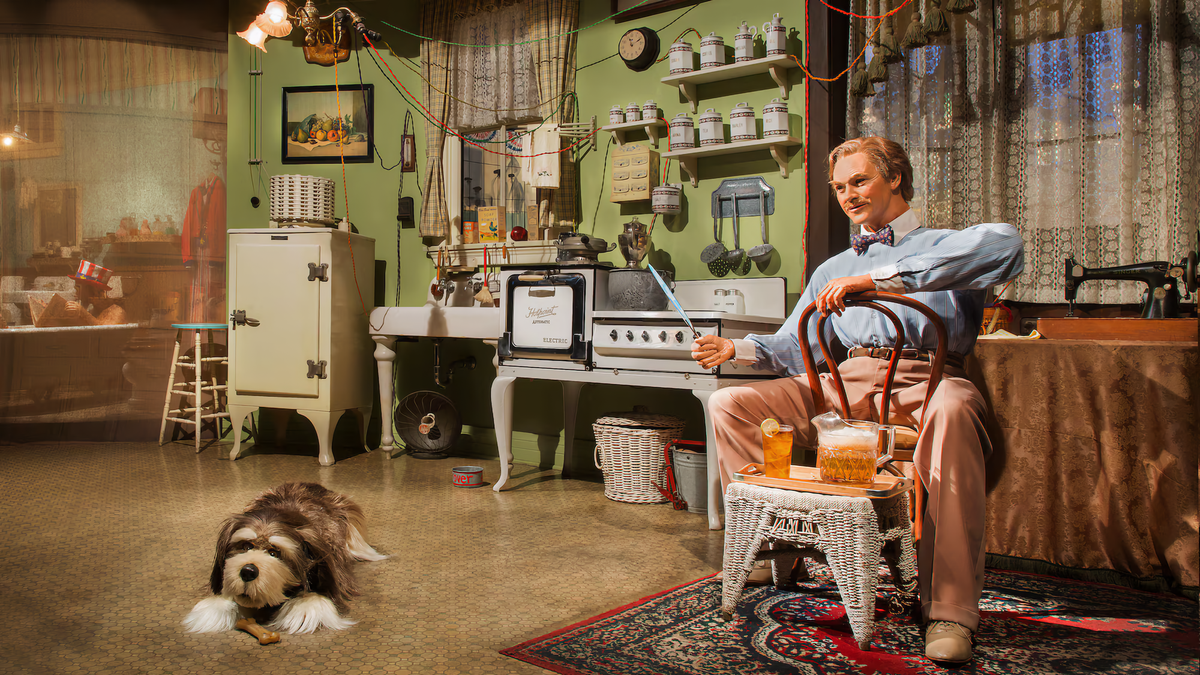
At Destination D23 last year, Disney excited fans with the announcement that the iconic Carousel of Progress would be receiving an update with a new opening scene featuring Walt Disney himself in animatronic form, to the delight of fans worldwide. This news, however, has sparked outrage amongst the fanbase.
Disney has decided to change virtually every part of the attraction by shifting the show's timeline ahead by half a century.
As with seemingly anything today, this change is incredibly polarizing and points to broader cultural and political debates happening in America. One side views the time shift as an affront to history and just another example of the "woke" mindset that they feel has consumed The Walt Disney Company since the summer of 2020. The other side welcomes the progress in the attraction about... let me check my notes... progress.
The former group, to me, is engaging in bad-faith revisionist history of the attraction rather than an accurate accounting of the intent of Walt Disney and his Imagineers.
When Carousel of Progress debuted at the 1964–65 New York World's Fair, it was not a museum piece. It was not designed as a sealed time capsule, hermetically preserved so that future generations could study turn-of-the-century dishwashing technology like archaeologists dusting off pottery shards. It was a living, optimistic, forward-looking show about the way technology changes everyday American life.
More importantly, the decades represented in the original show were not distant abstractions to World's Fair audiences. They were living memory. Plenty of guests walking into that theater had been alive for every era the attraction depicted. The show was nostalgia for older guests and a conversation starter for younger ones. You can practically imagine the grandkids pouring out of the theater asking their grandparents, "Wait, did you really have to pump water when you were my age?" That was the point. It connected generations through progress.
Carousel of Progress only functions as a history lesson today because Disney largely neglected to keep it updated. What was once a breezy tour through recent memory has, over time, hardened into accidental archival material. The attraction became "historic" not because it was originally intended to freeze America in amber, but because Disney allowed yesterday's vision of tomorrow to become old enough to collect dust.
That does not mean the old version lacks value. Of course it has value. It is charming, weird, warm, and deeply tied to Walt Disney's own personal optimism about technology and the American home. But preserving the spirit of Carousel of Progress does not require preserving every appliance, decade, and joke in exactly the same configuration forever.
In fact, the more radical betrayal of the attraction may be refusing to let it move forward.
Disney does not want to "destroy history," and the people making that argument know it. The American Adventure still exists. The Hall of Presidents still exists. Disney just took great pains to ensure that Great Moments with Mr. Lincoln remains available to guests at Disneyland. The company continues to operate multiple attractions whose entire purpose is historical memory, patriotic pageantry, or direct tribute to Walt Disney himself.
Carousel of Progress is different. It is not merely about where we have been. It is about the idea that life keeps changing, usually for the better, one household innovation at a time. The original show was not asking audiences to worship the past. It was asking them to marvel at the distance between then and now, and then look ahead.
That is why the proposed timeline shift is not some ideological vandalism of a sacred text. It is, at least in concept, an attempt to restore the attraction's original function. A 1960s scene today can do for modern grandparents what the 1900s scene did for World's Fair audiences. A 1980s scene can make parents wince, laugh, and explain to their kids what life was like before the internet lived in everyone's pocket. A 2000s scene can turn the recent past into recognizable memory. And a far-future finale can once again give the attraction permission to dream instead of awkwardly pretending that a voice-activated oven and a virtual-reality game console still represent the cutting edge of human achievement.
There has always been a great big beautiful tomorrow shining at the end of every day. The whole point is that tomorrow eventually becomes today. Then, if we are lucky, today becomes nostalgia. And then the carousel turns again.